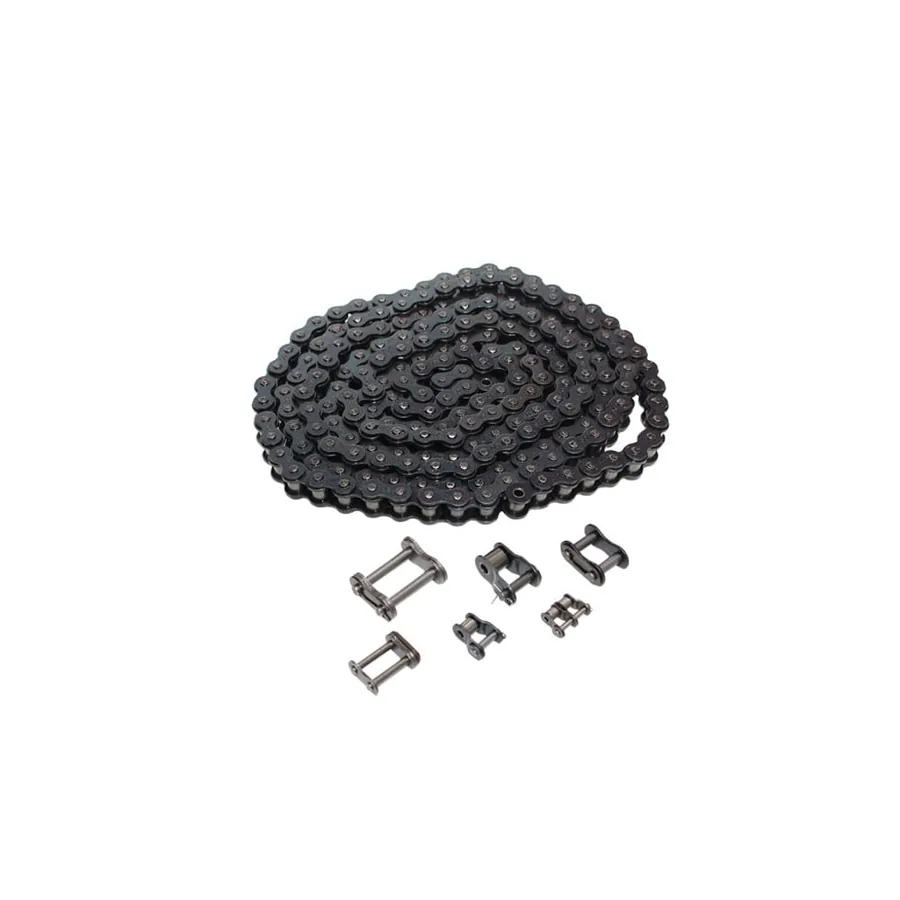
Where chain drives are used
In mills, screw and chain conveyors, feed rolls, couplings and low-speed, high-torque drives often run on roller chain. The chain transmits power between two steel sprockets without slip. The connecting link joins the two ends of the chain into an endless loop and makes fitting and removal easier.
Why chains “stretch”
Chain “stretch” is really wear between pins and bushes. Small wear at each link adds up along the chain and increases its pitch. A stretched chain no longer seats in the sprocket, rides up the teeth, runs roughly and quickly wears both itself and the sprocket. A widely used practical limit is about 3% elongation over nominal length; at that point the chain should be replaced.
How to measure elongation
With the chain under tension, measure a set number of pitches (e.g. 10 or 20) and compare with the nominal value. A chain wear gauge makes the check quicker.
Fitting the connecting link
- On spring-clip links, the closed end of the clip should face the direction of chain travel; otherwise the clip can catch and come off.
- Oil the link pins and make sure the side plate seats fully.
- The link must be the same size and standard as the chain.
Lubrication
Lubrication is the biggest factor in chain life. Oil must reach between pin and bush; in flour-dusty areas clean the chain regularly to limit dust mixing with oil. When changing the chain, check the sprockets too: a worn sprocket soon stretches a new chain.