
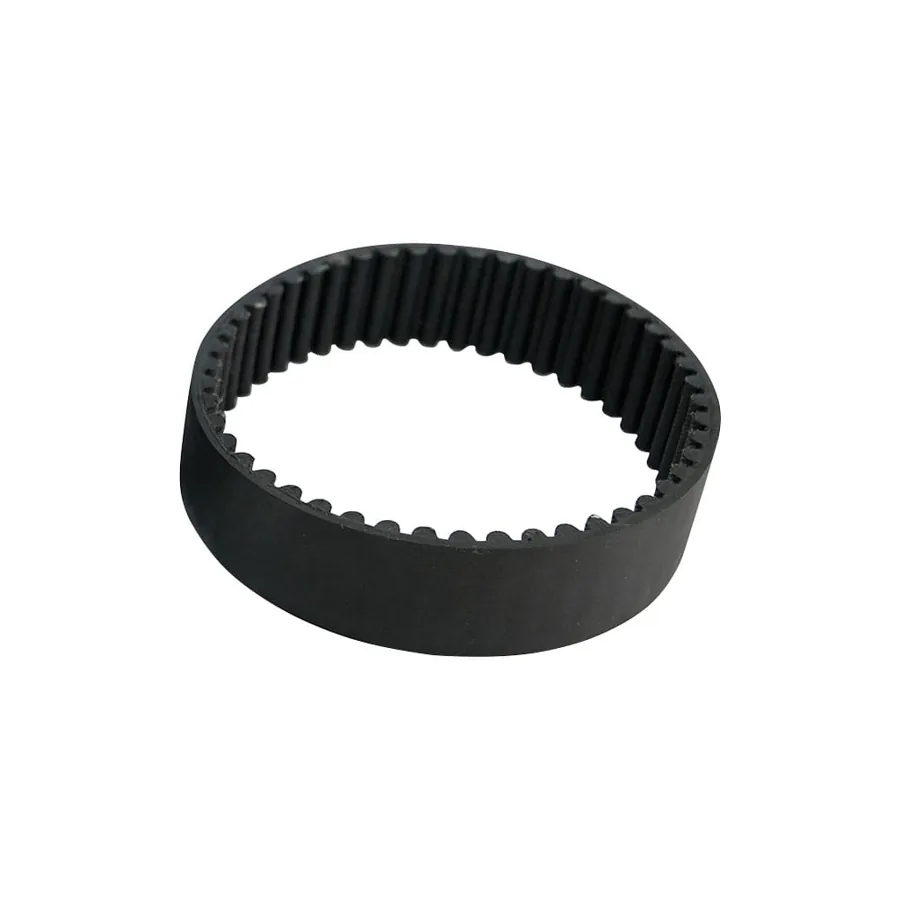
How a timing belt works
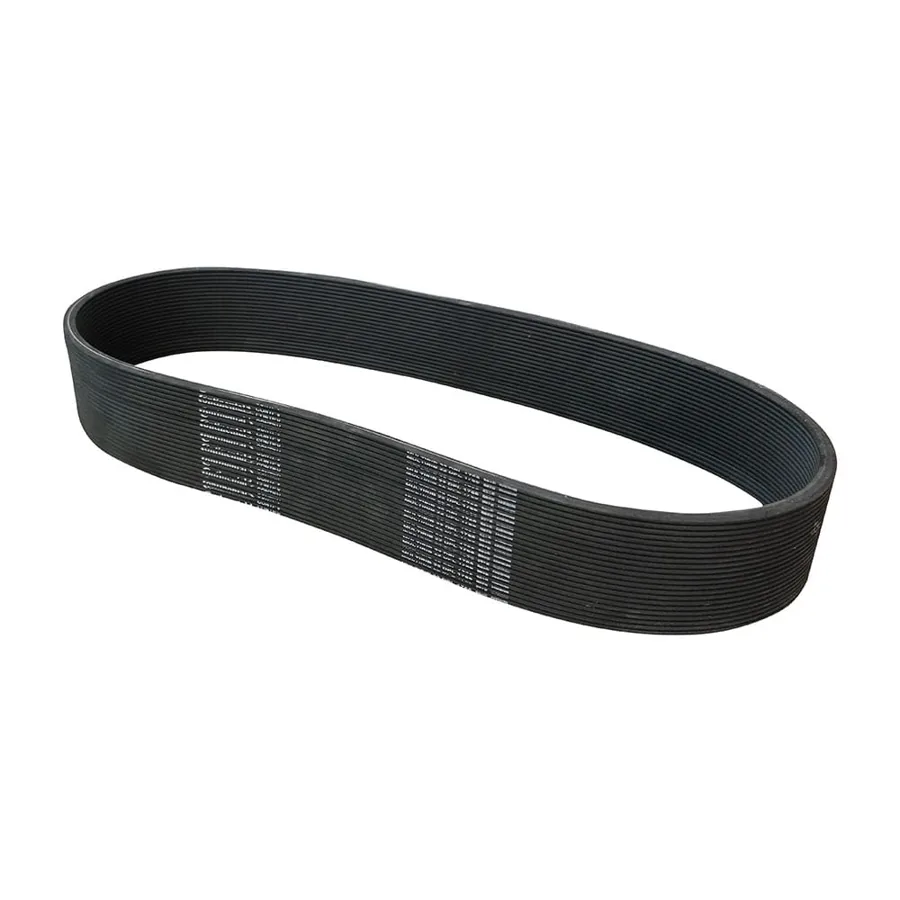
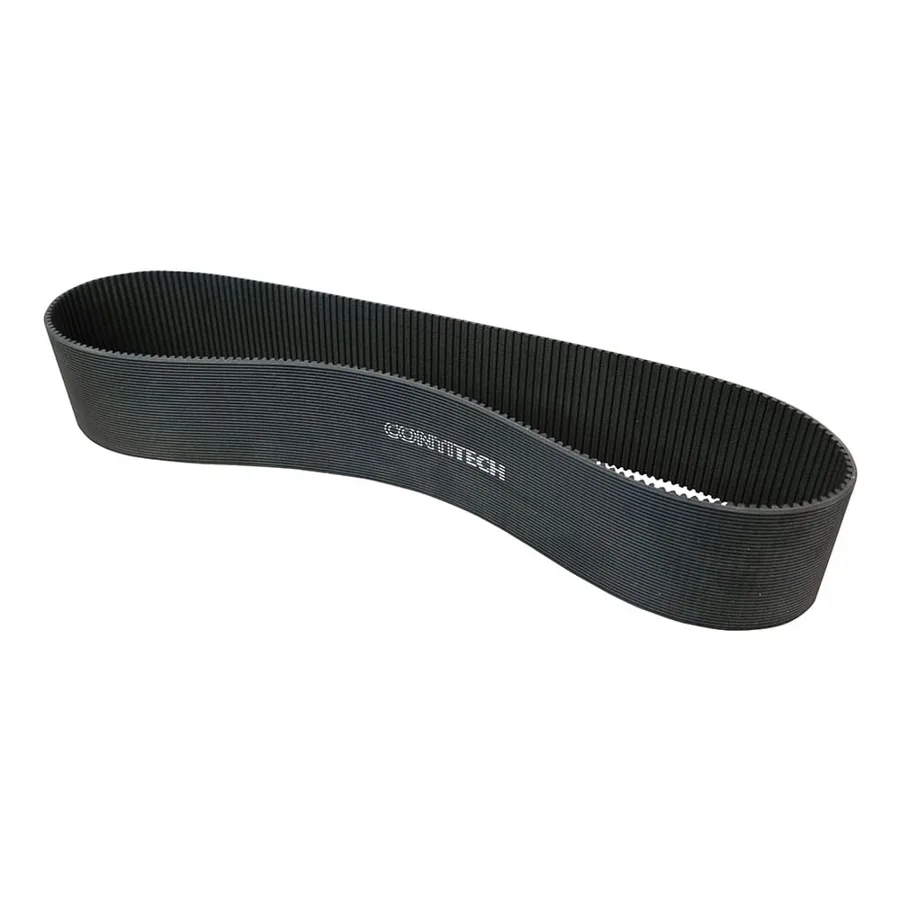
A timing belt has teeth on its inner face and tensile cords in its body that stop it stretching. The teeth mesh with the pulley teeth, so the belt does not slip and the speed ratio between the shafts stays constant regardless of load. On an M8 timing belt the distance between teeth is 8 mm, and the belt runs only on M8 pulleys of the same pitch.
How to read belt size
Timing belts are usually specified as length – pitch – width. A code such as “1760-8M-30” means 1760 mm pitch length, 8 mm tooth pitch and 30 mm width. Tooth count = pitch length / 8. All three values must match the old belt, and the tooth profile must suit the pulley.
Mistakes that shorten belt life
- Bending or kinking the belt: the internal tensile cords break and the belt can snap suddenly.
- Levering it on over the pulley edge: damages the cords.
- Over-tensioning: strains the bearings, wears the belt teeth and causes whine.
- Oil and chemical contact: degrades the belt material.
Signs it needs replacing
Cut or missing teeth, cracks at the tooth roots, a glazed belt back and the belt tracking to one side all show it is time to replace. If teeth have sheared, check the pulley teeth too; burred or worn pulleys will ruin a new belt quickly.