
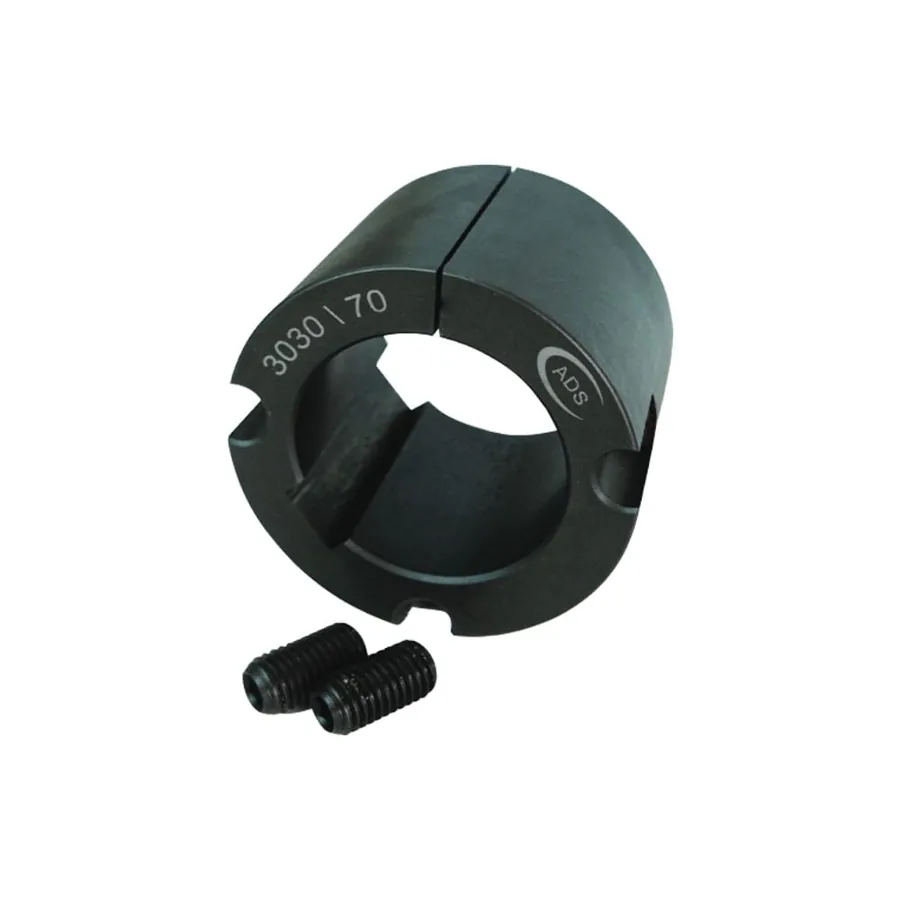
The standard bush for roll drives
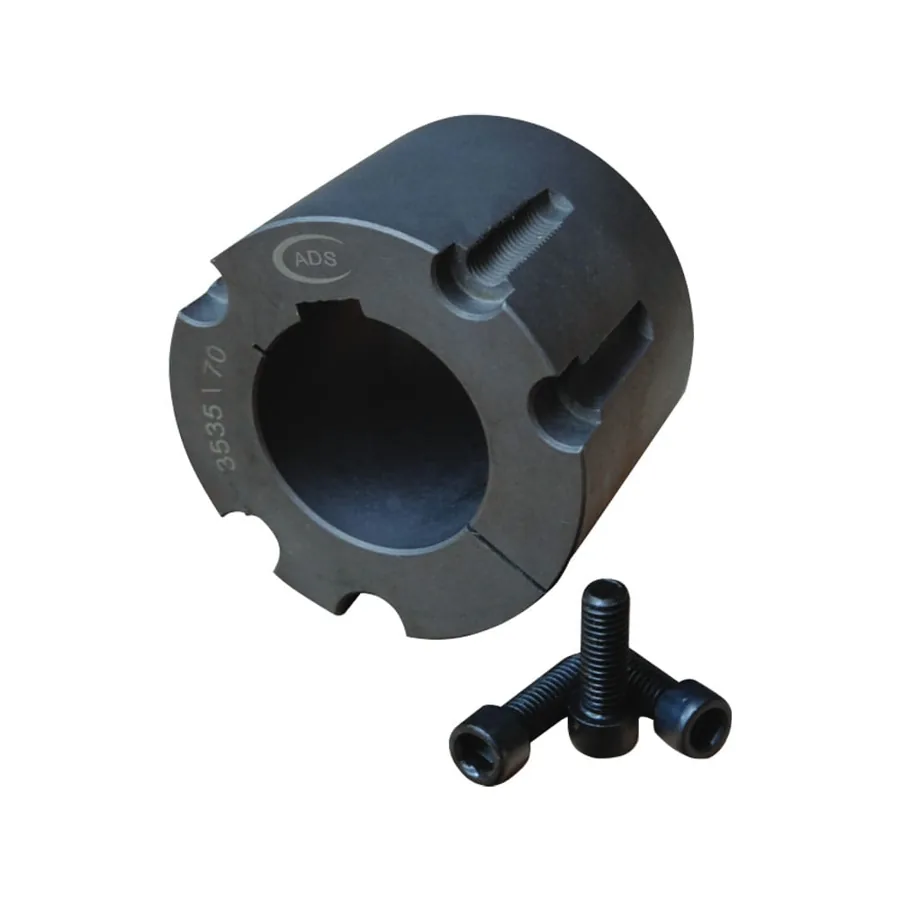
The 3030 taper bush is the bush series most often found on roll pulleys in flour mills. For example, the pulleys in our PL22 smooth roll set come with bushes marked “3030-70”, i.e. 3030 bushes for a 70 mm shaft. The code means a maximum shaft bore of about 3.0 in (75 mm) and a bush length of 3.0 in (about 76 mm).
Reading the bush markings
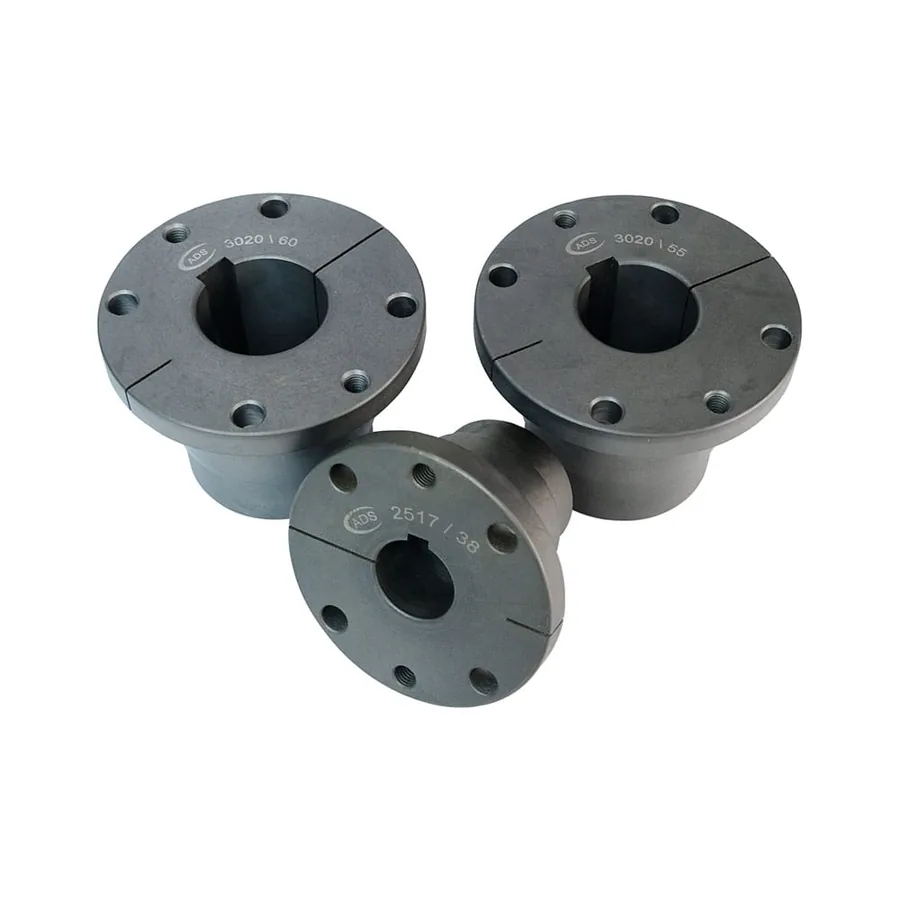
The bush face usually carries the series code and the bore: “3030-70” means a 3030 series bush with a 70 mm bore. That alone is enough to order a replacement. The bush also has a keyway; the key size is set from standard tables according to shaft diameter.
Common mistakes
- Oiling the tapered surface: the bush slips when tightened and the pulley loosens in operation.
- Fitting without a key: a taper bush holds by friction, but under shock loads the key adds security.
- Tightening screws out of sequence: the bush seats at an angle and the pulley runs out of true.
- Hammering the bush off: the correct method is to insert a screw in the removal hole and tighten it.
Stock and supply
We stock 3030 bushes in various bores. Standard bores range from about 35 mm to 75 mm. For bushed pulley orders we prepare the right bush with the pulley.