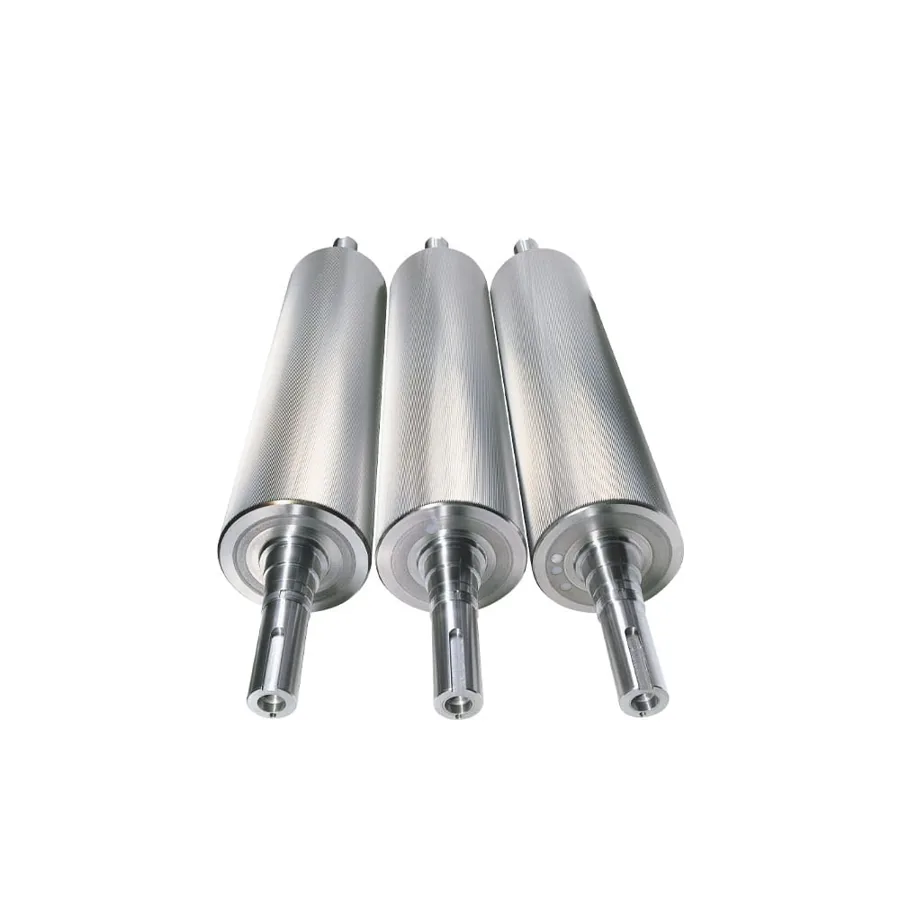
The heart of the mill: rolls
In a flour mill, grinding happens between pairs of rolls turning towards each other at different speeds. A mill roll is each cylinder of this pair. The roll surface condition, the gap between rolls and the speed differential directly determine flour extraction, ash value and energy use.
Fluted and smooth rolls
- Fluted (break) rolls: have inclined flutes on the surface. In the break passages they open the kernel and start separating endosperm from bran. Flute count, profile and spiral are chosen for each passage.
- Smooth (reduction) rolls: have a smooth or lightly matted surface. In reduction passages they turn semolina and coarse flour into flour.
Why surface hardness matters
Rolls are cast so that the surface is very hard while the core is tougher. The hard outer layer resists wear and keeps flutes sharp for a long time; the tough core gives resistance to breaking. Insufficient surface hardness makes flutes blunt quickly, leading to extraction losses.
Maintenance: refluting and grinding
- Flutes blunt over time; a blunt flute crushes the kernel instead of cutting it, so bran shatters and mixes into flour. The roll is then ground and refluted.
- Smooth rolls become glazed or wavy; the surface is renewed by grinding and matting.
- Each grind reduces roll diameter; a roll below the minimum diameter must be replaced.
Supply
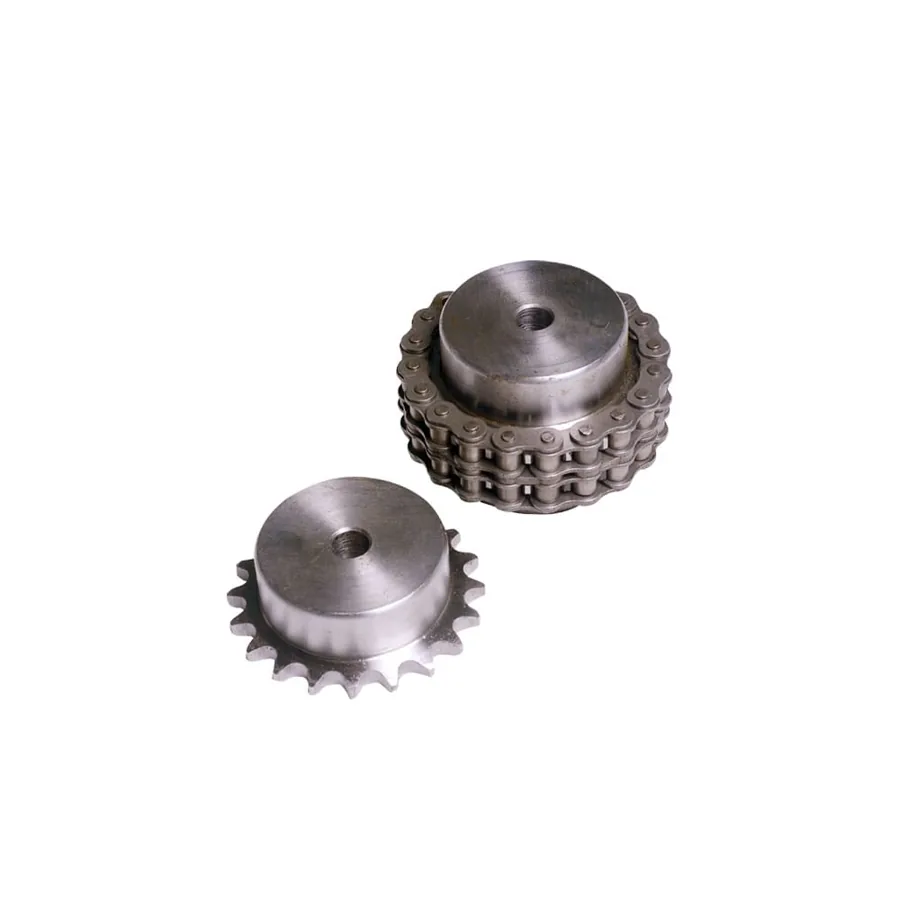
Send us the roll diameter, length, journal dimensions and flute details and we will supply the right mill roll. We manufacture matching roll gears and pulley sets in our own workshop.