Why rolls are cleaned
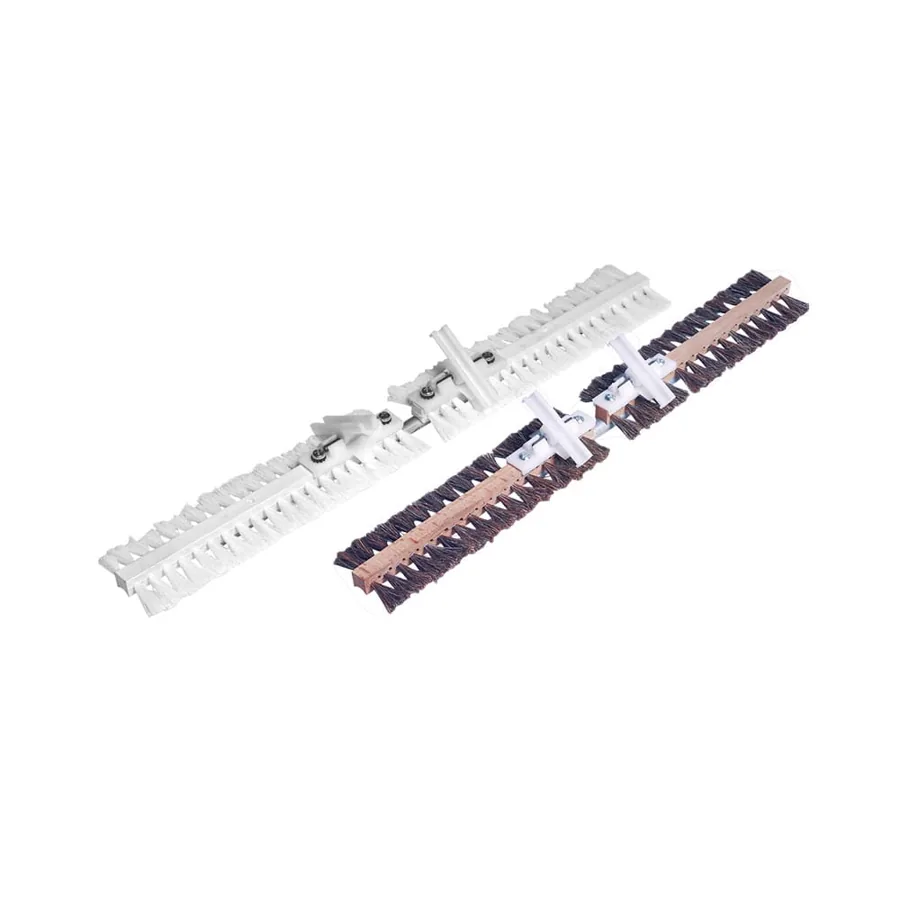
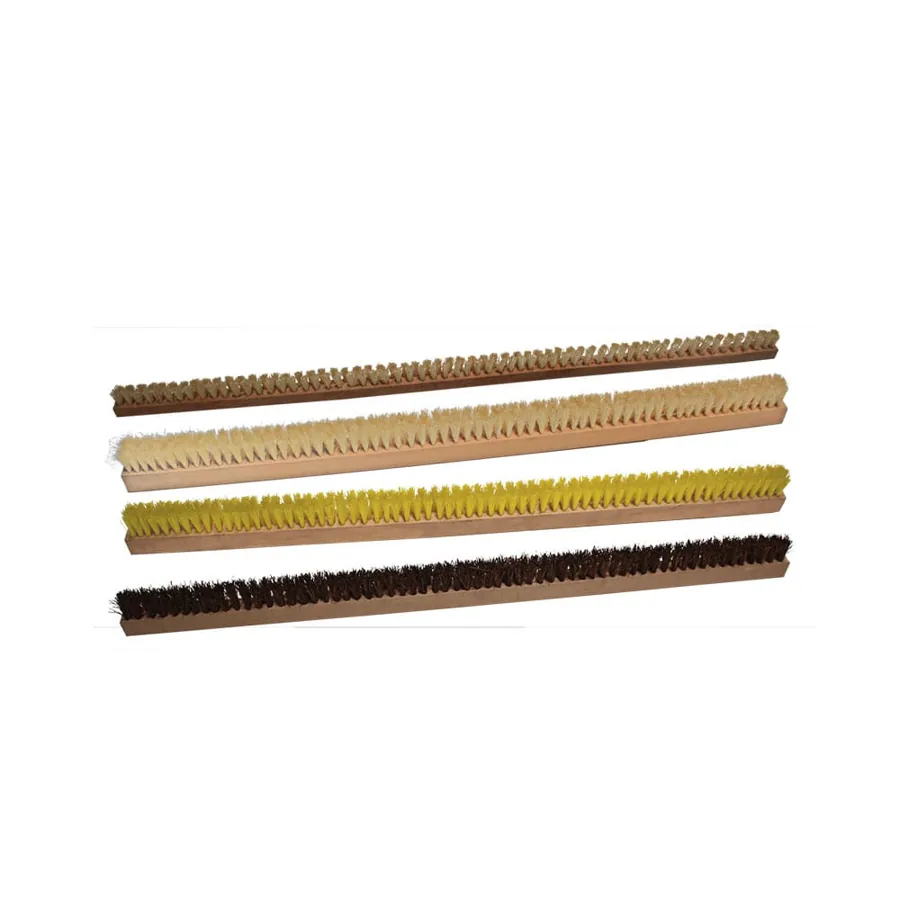
During grinding, sticky particles from flour, bran and especially moist product can stick to the roll surface. On fluted break rolls this build-up fills the flutes and reduces the roll’s cutting ability. That is why a cleaning element in constant contact with the surface sits under the roll. The roller brush is the strip brush that does this job, used especially on fluted rolls.
Brush or blade?
- Roller brush: bristles reach into the flutes. Widely preferred on fluted (break) rolls.
- Scraper blade: scrapes the surface with a straight edge. Used mostly on smooth (reduction) rolls.
The right cleaning element depends on the roll type and the product.
Bristle material and construction
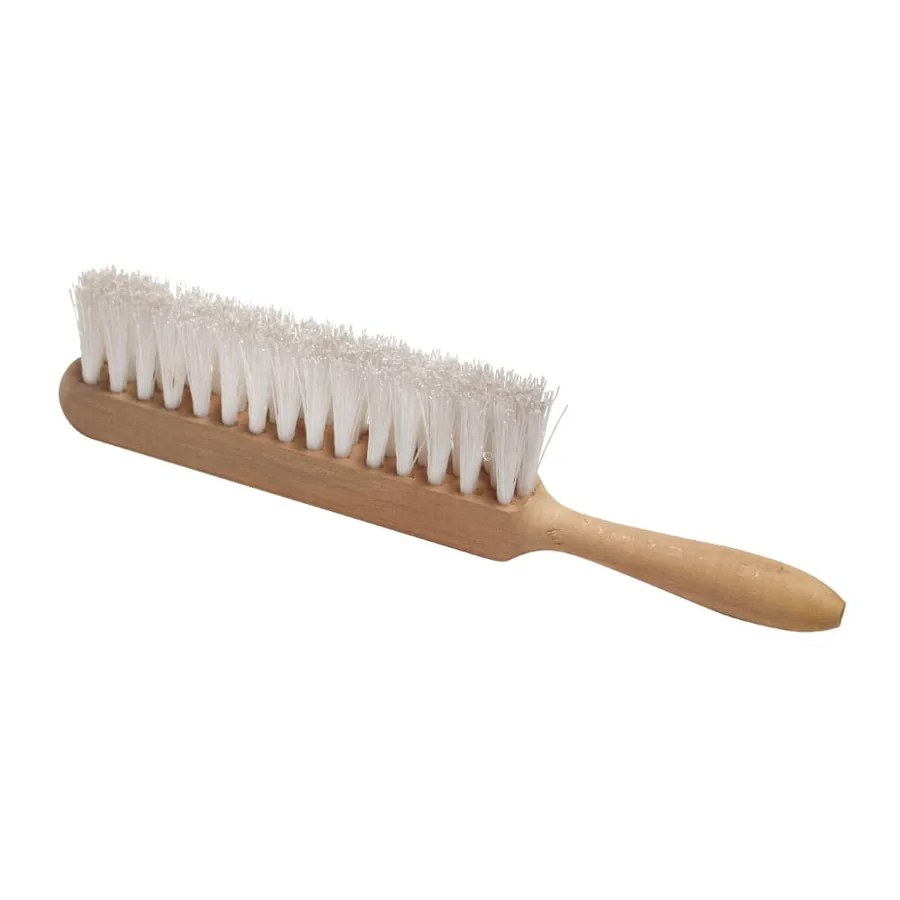
Roller brushes consist of natural or synthetic bristle strips firmly fixed to a body. Bristles must be flexible enough not to harm the roll surface but stiff enough to lift built-up product. Bristle length is chosen so the brush contacts the roll with the right pressure.
Adjustment and replacement
- The brush should contact evenly along the roll; where it does not touch, build-up begins.
- When bristles shorten, flatten or thin out, cleaning weakens.
- Regular checks matter so loose bristles do not end up in the product.
Send us the roll length and brush holder dimensions and we will supply the right roller brush.