Break Rolls vs Smooth Rolls: Choosing Gears and Pulleys
Break and smooth (reduction) rolls do different jobs and run at different speed ratios. Here is how that difference affects gear and pulley selection.
· 2 min read · Altınbaşak Dişli Sanayi
In a flour mill, wheat does not become flour in one pass; it goes through roller mills step by step. Two types of rolls are used in these steps: break rolls and smooth (reduction) rolls. Because their jobs differ, so do the roll surfaces, the speed ratios and therefore the gear and pulley sets.
Break rolls: opening the kernel
Break rolls are fluted. Their purpose is to open the kernel and separate the endosperm (semolina) from the bran as cleanly as possible. The fluted rolls turn at a clear speed differential, which cuts the kernel open instead of crushing it. Break passages generally run at a higher speed ratio than reduction passages.
Smooth rolls: from semolina to flour
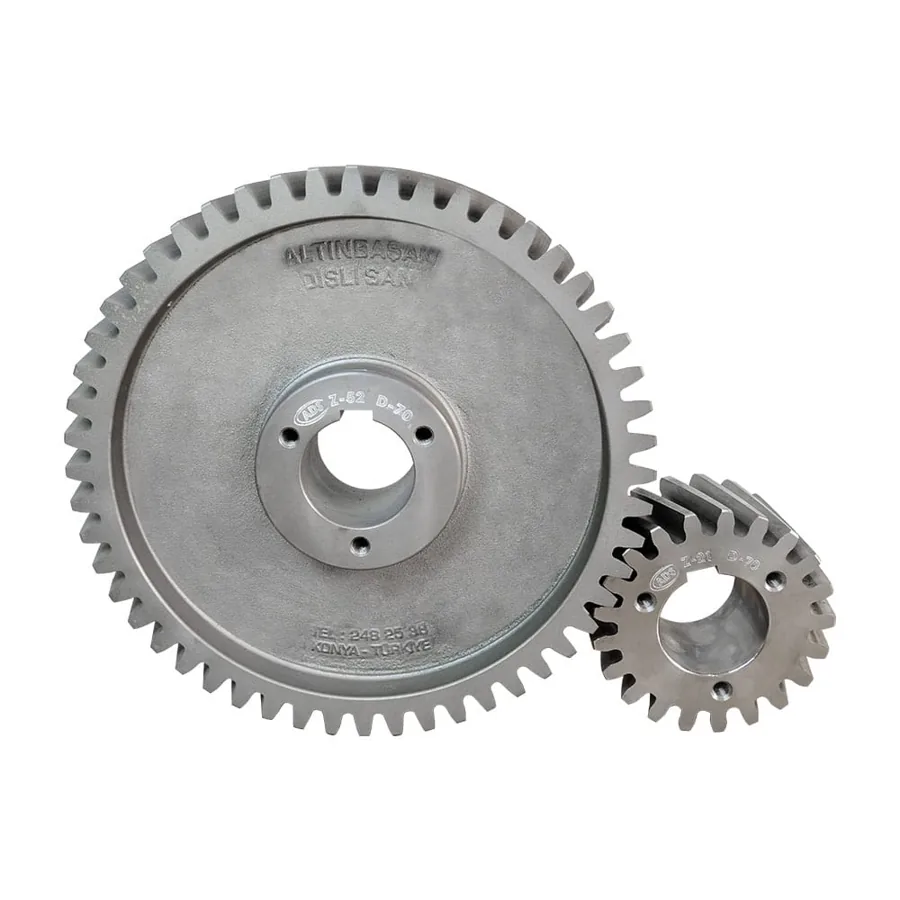
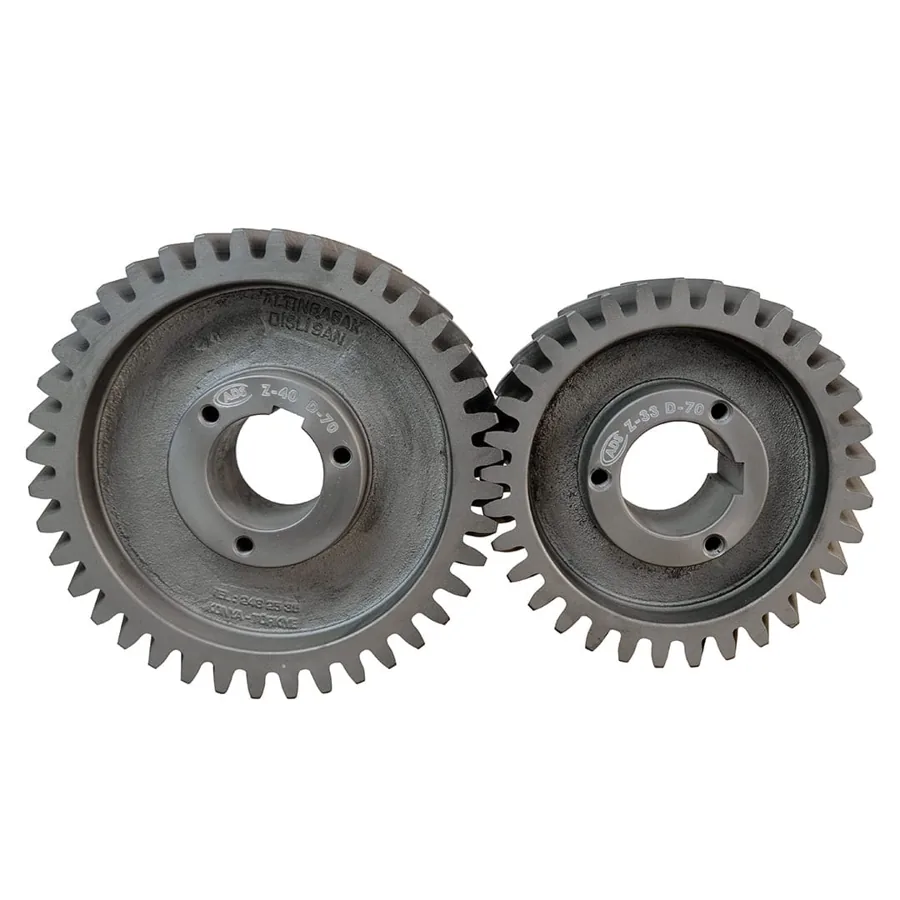
Smooth rolls have a plain surface. Semolina and middlings coming from the break passages are reduced to flour on the smooth rolls. The aim here is to grind finer by pressure rather than to cut, so the speed differential is kept lower. For example, the Z-40 and Z-33 gear pair in our smooth roll sets gives a speed ratio of about 1.2.
How does this affect gear and pulley selection?
- Tooth counts differ: Break and smooth roll gears are made for different ratios and should not be swapped.
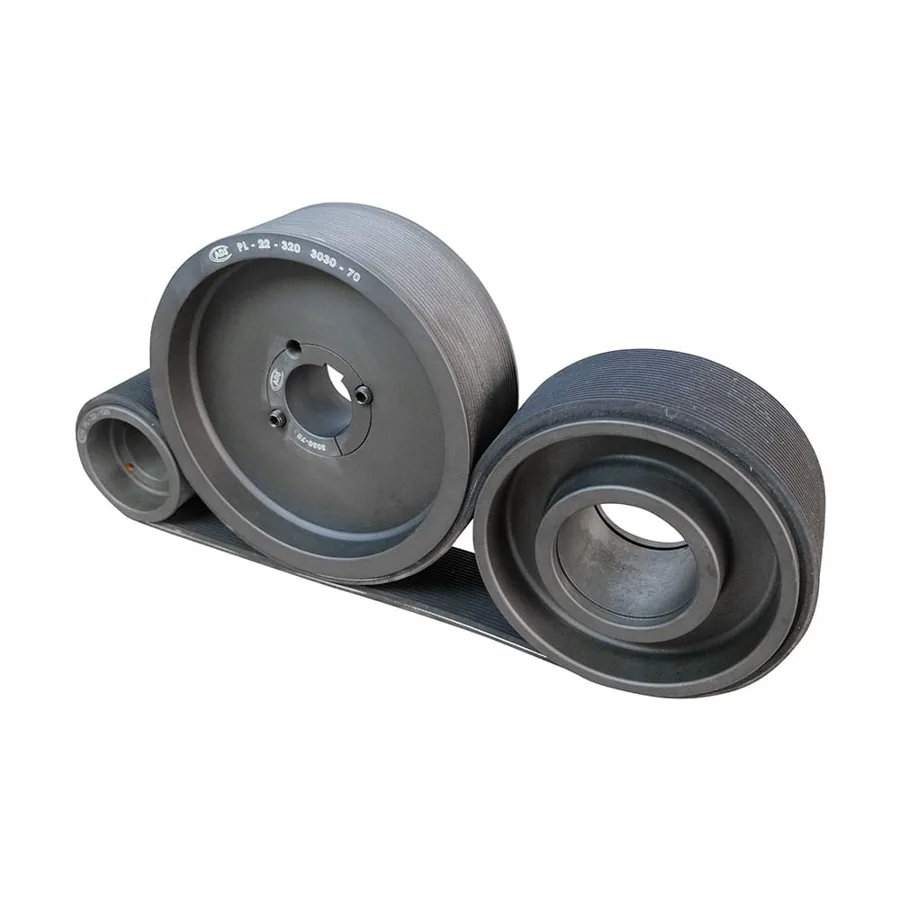
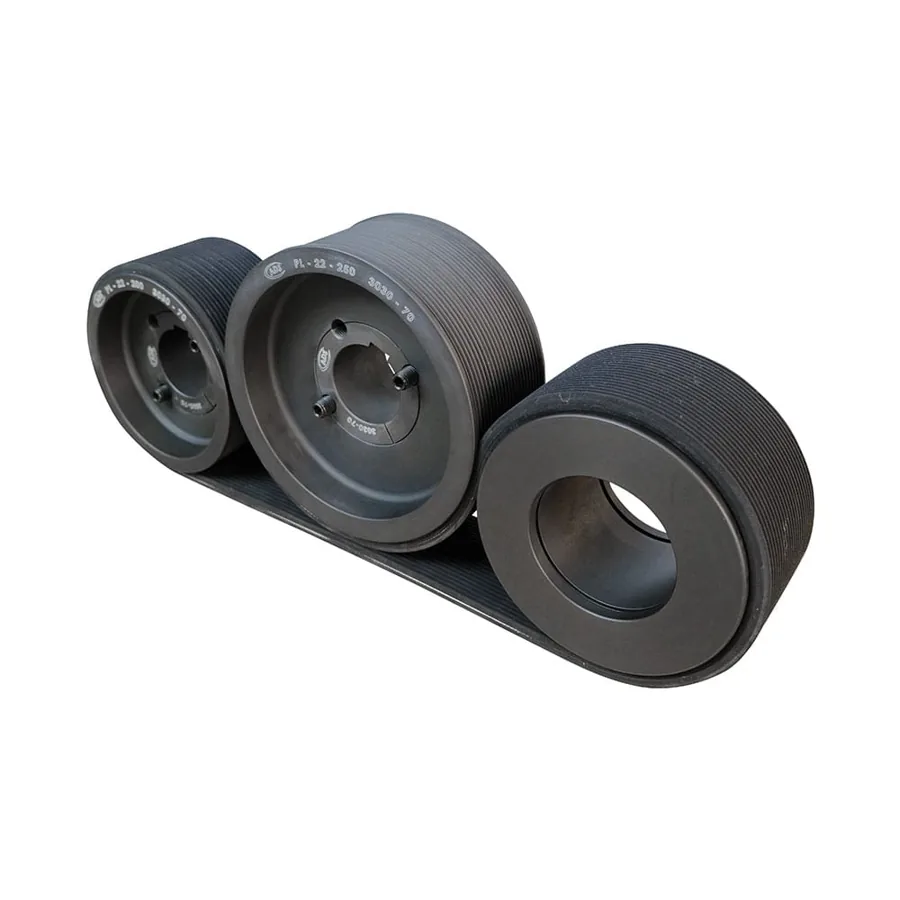
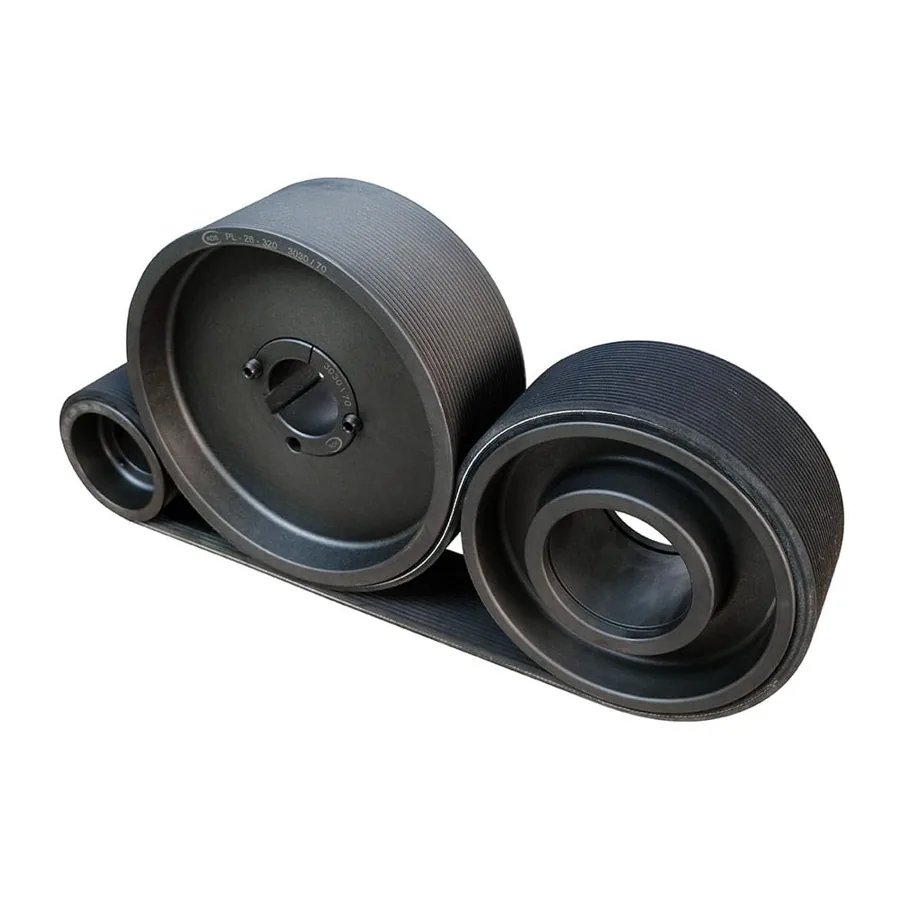
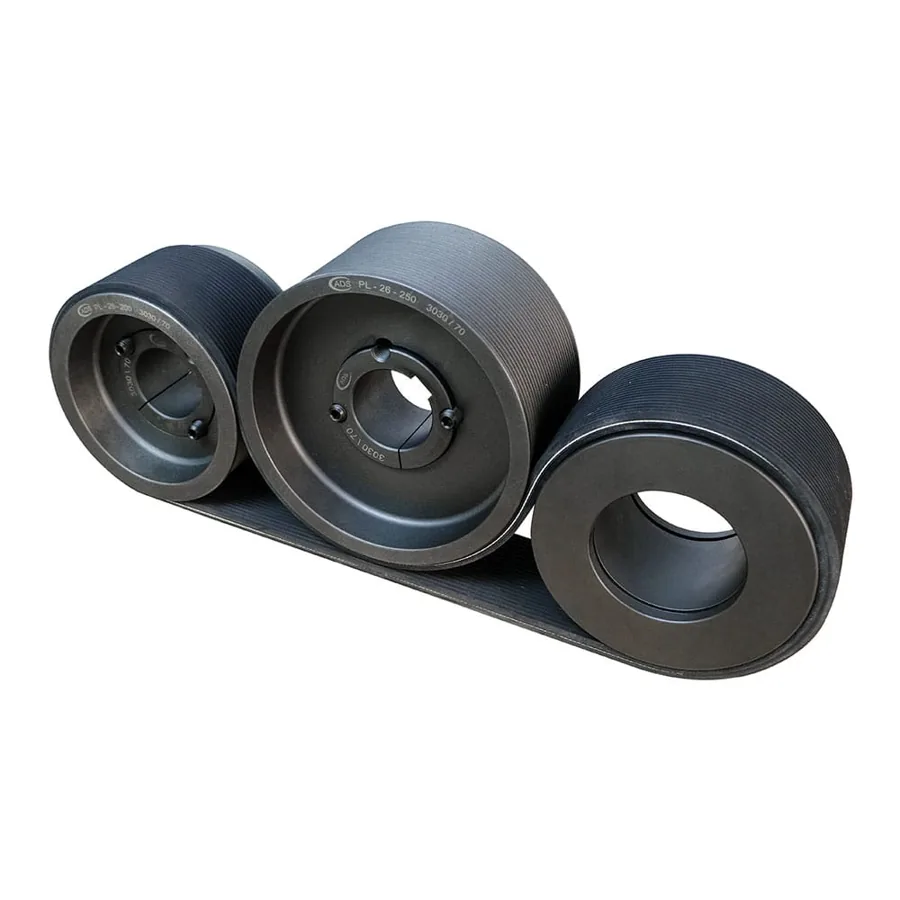
- Think in sets: Triple sets such as PL22, PL26 and PK36 combine a matching gear, pulley and belt.
- The mill model matters: Even for the same passage type, dimensions can vary by roller mill make and model.
Ordering the right part
When ordering, tell us the mill model, whether the passage is break or smooth, and if possible the tooth count marked on the existing gear (for example “Z-40”). Our gears are marked with tooth count and bore size, which lets us send the right part the first time.