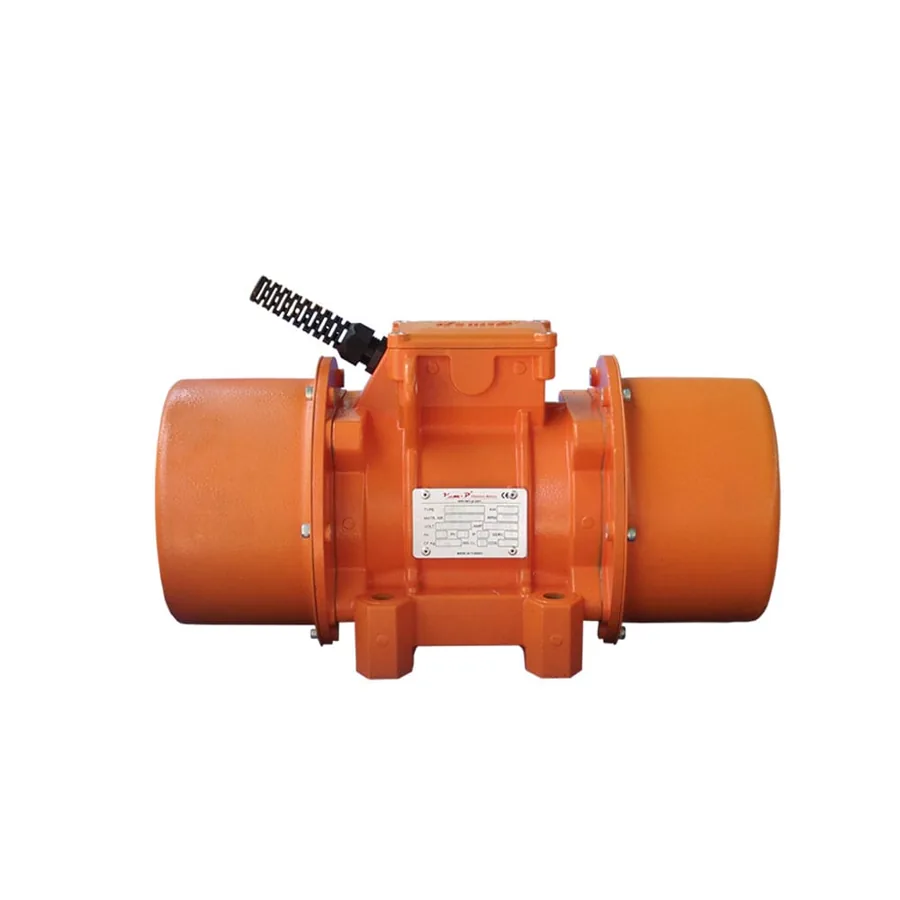
How a vibration motor creates vibration
A vibration motor is an electric motor with eccentric weights on both ends of its shaft. As the shaft turns, the off-centre weights create centrifugal force and the motor vibrates the structure it is fixed to. Vibration force is adjusted by changing the angle of the weights.
Where it is used in mills and plants
- Separators and pre-cleaners: vibrate the sieve box to move and classify product over the screens.
- Vibratory feeders: deliver product to the next machine at a steady, adjustable rate.
- Destoners: vibrate the deck so stones walk upward.
- Bin and silo discharge: help bridging or sticking product to flow.
Adjustment and twin motors
- Force setting: changing the angle between the inner and outer eccentric weights raises or lowers vibration force. Weights at both ends must be set to the same angle.
- Twin motors: many separators use two vibration motors turning in opposite directions to produce linear vibration. Both motors must have equal angles and settings.
Mounting and maintenance
- Mount the motor on a rigid, flat surface with the bolt grade and torque the maker recommends; loose bolts damage both motor and structure.
- Check fixing bolts after first start-up and periodically.
- Bearings run under heavy load; rising noise and temperature are early signs of bearing failure.
- Route the power cable flexibly and secure it so it does not chafe with vibration.
Send us the power, speed and vibration force values or your current motor’s nameplate details and we will supply the right vibration motor.