Why clean inside pipes?
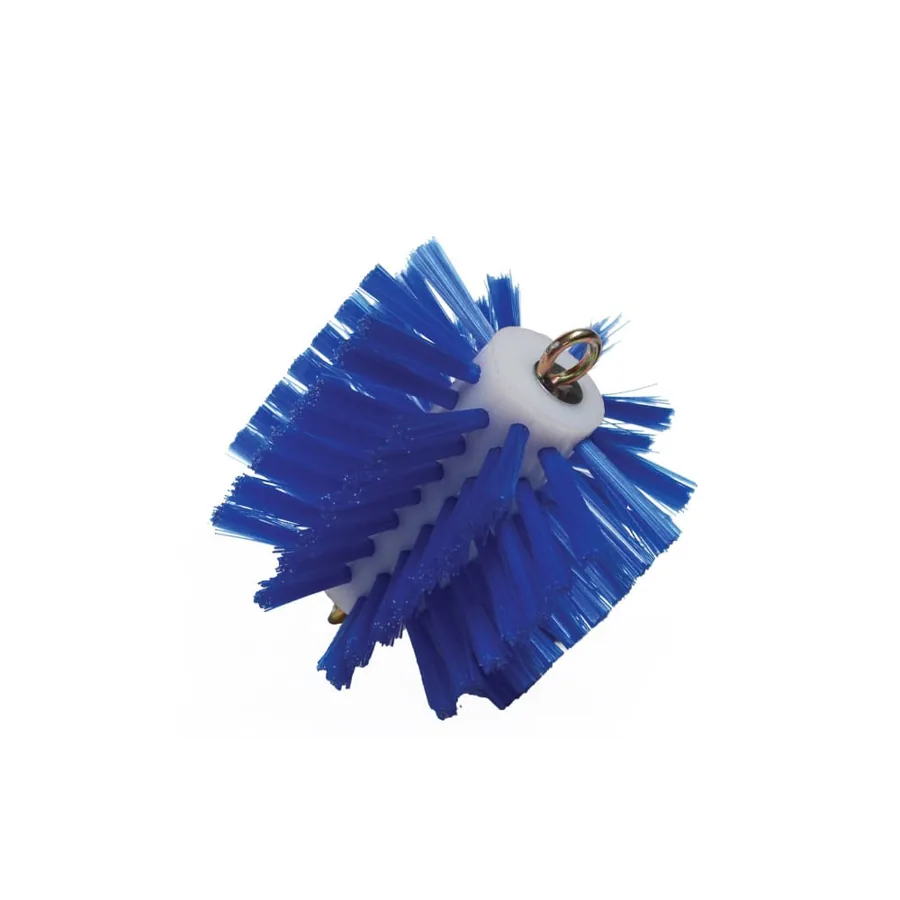
Spouts, pneumatic lines, screw conveyor housings and small hoppers are surfaces you cannot see from outside but that are in constant contact with product. In humid periods, or when a line stands idle, product sticks to them, builds up in layers and eventually becomes a home for mould and pests. A pipe brush is a round brush that reaches these closed surfaces and removes deposits mechanically.
Where it is used
- Spouts and bends: removing product that settles inside bends and in sections with little slope,
- Pneumatic line inlets and cyclone mouths,
- Sampling and inspection holes,
- Small hoppers, ducts and internal machine cavities.
Choosing the right diameter
The brush diameter should be slightly larger than the pipe’s inside diameter, so the bristles press against the wall. A brush that is too small does not touch the wall; one that is too large jams and is hard to push. On long runs, an extension handle or flexible shaft makes access easier.
Hygiene and tips
- Clean only after the line is emptied and isolated from power.
- Collect loosened deposits downstream so they do not return to the product.
- Do not use brushes that shed bristles or are deformed.
- Clean the brush after use and store it dry.
Send us the pipe diameter and we will supply the right pipe brush.