What does a reducer do?
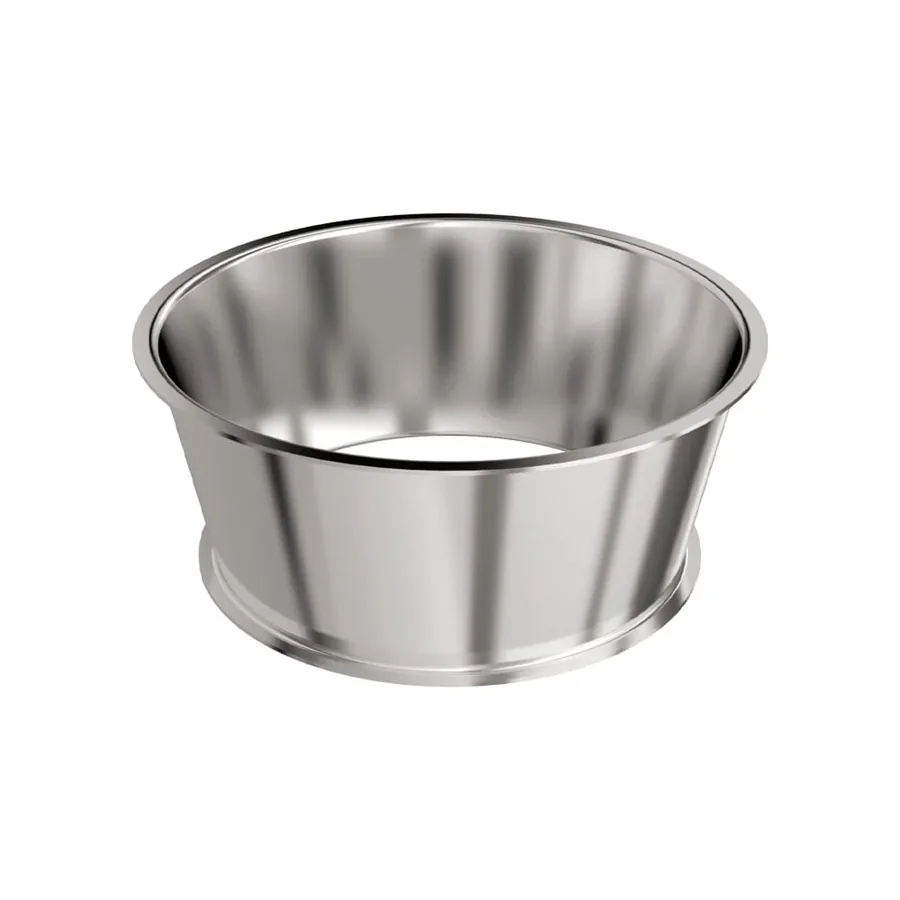
Diameter changes are unavoidable in mill pipework: a machine outlet and the flow pipe it connects to may differ, or pipe size may change along a line with product volume. A reducer joins two pipes of different diameters with a conical transition, giving a smooth change instead of a sudden step.
Why a conical rather than a sudden transition?
- Flow continuity: at a step, product hits the edge, slows and builds up.
- Choke risk: a sudden step in a narrowing section can jam product.
- Pressure loss in pneumatic lines: a conical transition reduces turbulence and unnecessary pressure loss.
Cone angle and length
Reducer length and cone angle depend on the difference between the two diameters. A very short, steep cone causes problems similar to a step; a suitable cone angle matters especially when flowing towards the smaller size. Eccentric reducers keep one side of the pipe straight, which can help product slide along that face.
Material and fitting
Stainless reducers give hygiene and corrosion resistance. When fitting, avoid steps on the inside and keep welded or clamped joints aligned. Send us the large and small diameters, required length and reducer type (concentric or eccentric) and we will prepare the right part.