The role of the pulleys on a plansifter
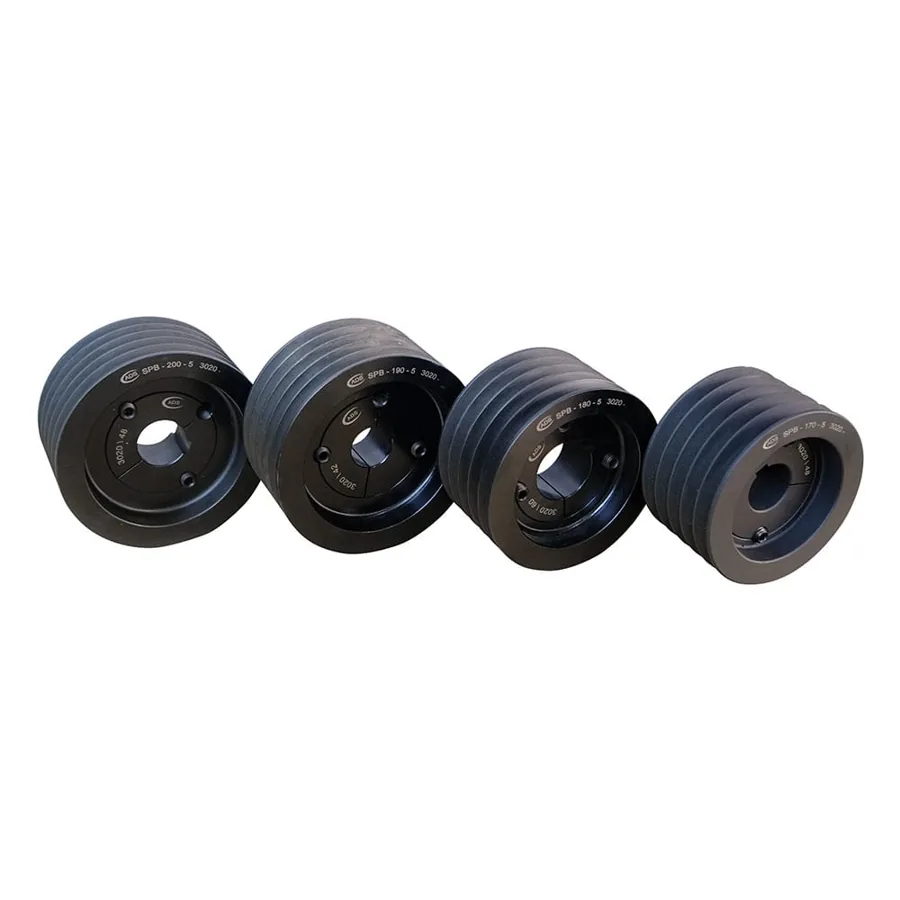
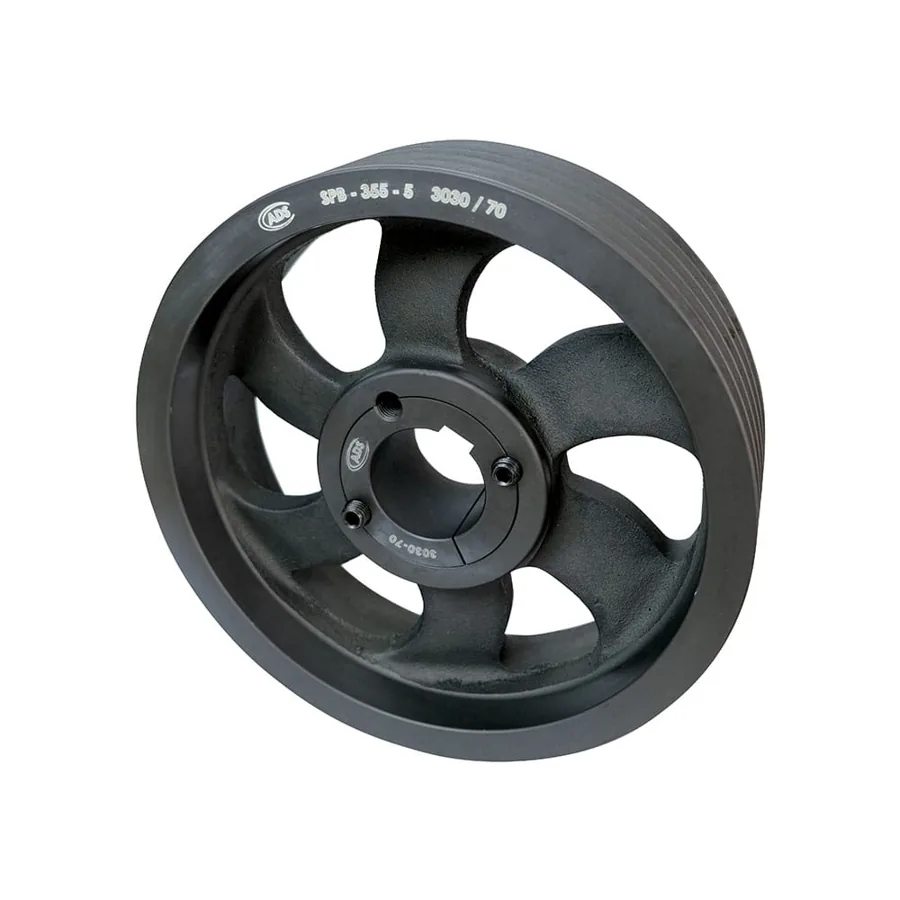
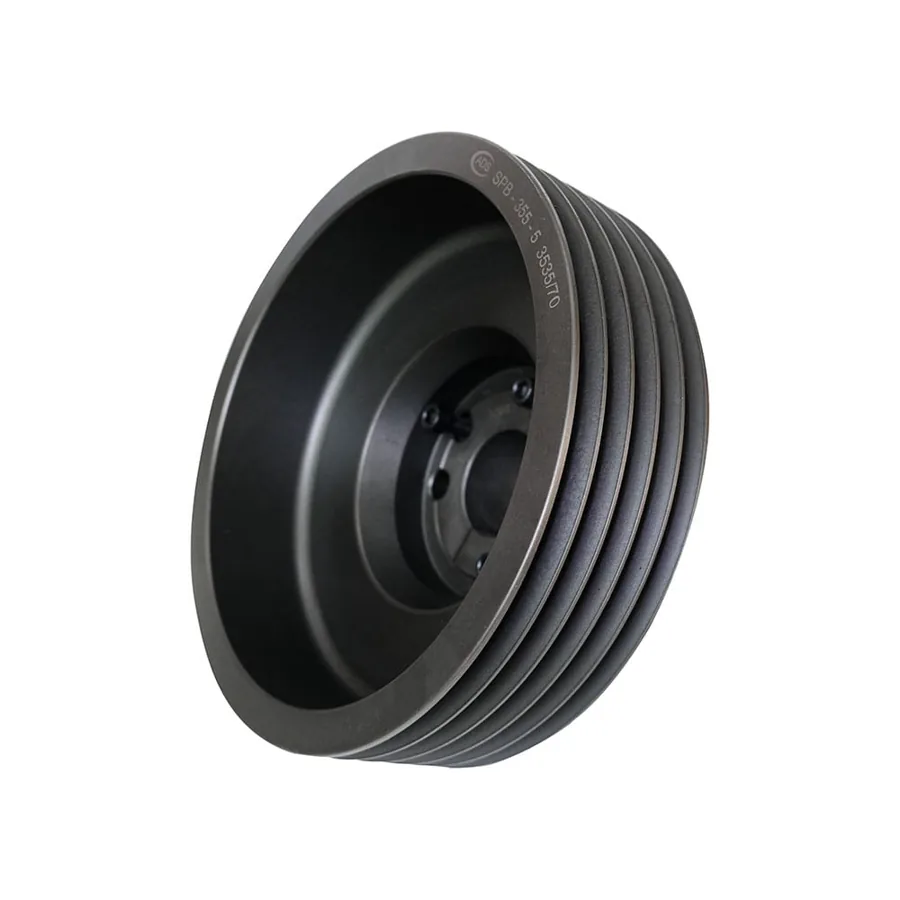
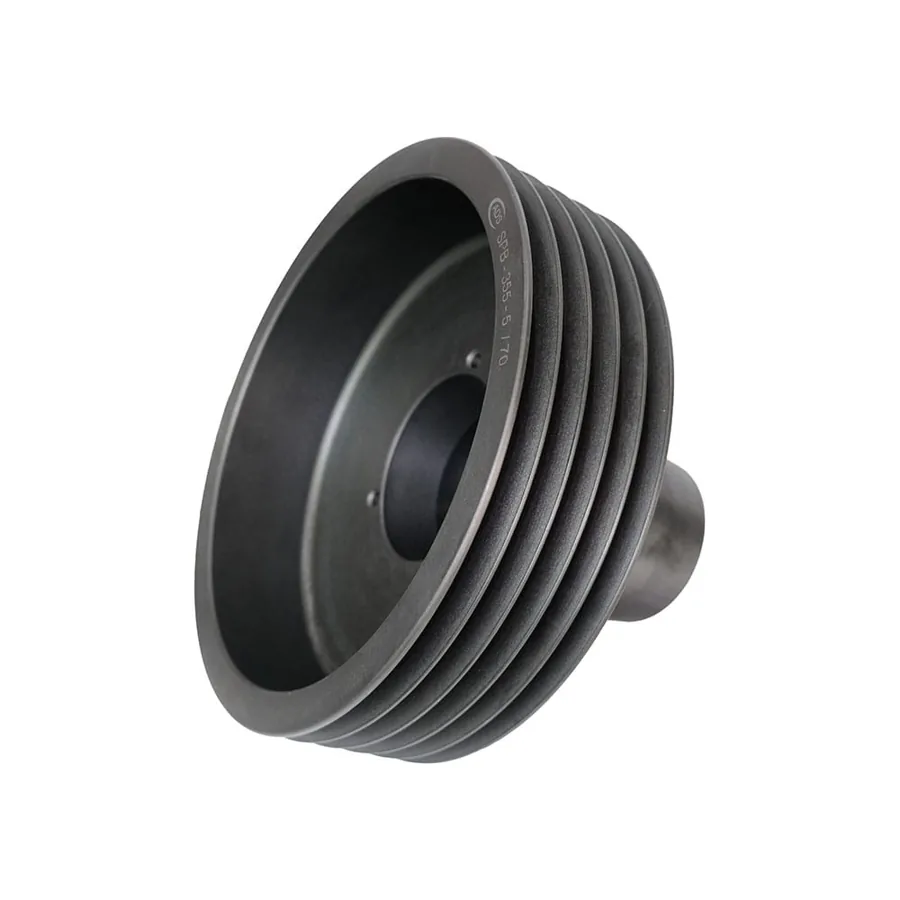
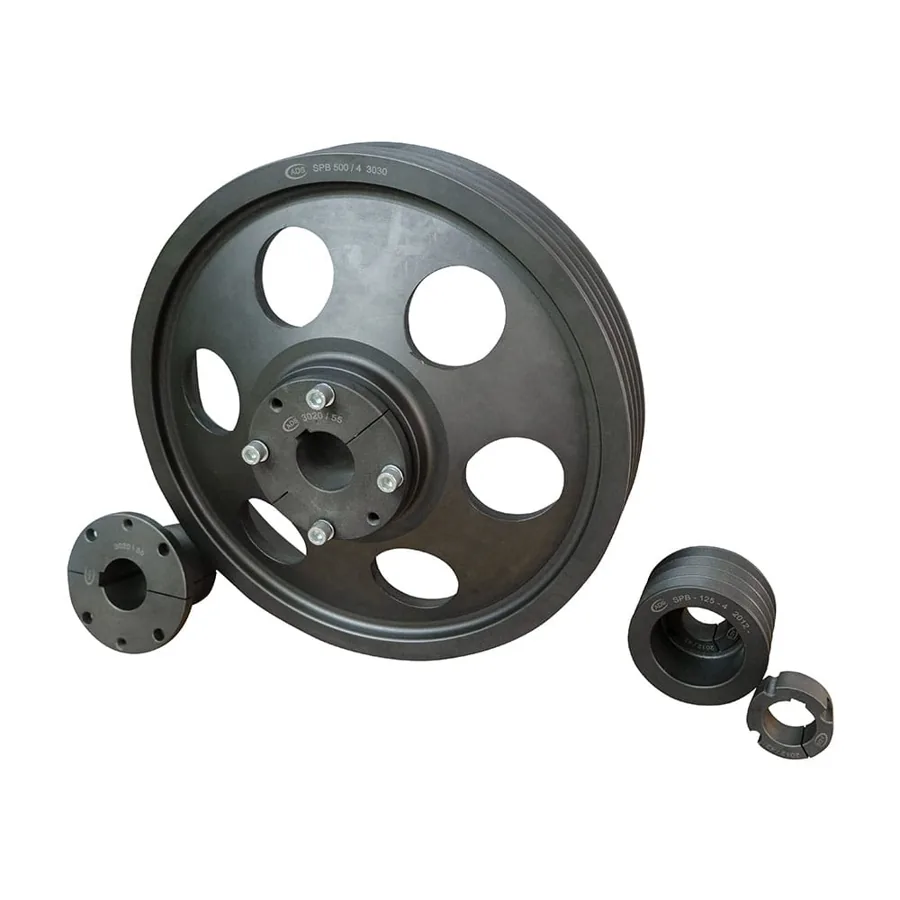
Plansifter boxes work with a circular oscillating motion, which they take from an electric motor through belts and pulleys. Motor speed is much higher than the oscillation speed the sifter needs; the speed reduction is done by the SPB-4-125 (motor side, 125 mm) and SPB-4-500 (sifter side, 500 mm, bushed) pulley pair.
Ratio and oscillation speed
The 500 / 125 ratio is about 4:1. For example, a drive with a motor of roughly 1000 rpm turns the sifter side at around 250 rpm. Oscillation speed directly affects sifting: too slow and the product does not spread over the sieve; too fast and it flows off quickly, efficiency falls and the machine is overloaded. The right speed is the sifter maker’s value, and pulley diameters are chosen to match it.
Why four grooves, and why bushed?
- Four SPB grooves give enough grip to overcome the sifter’s high inertia at start-up without slipping.
- A bushed large pulley sits centred and backlash-free on the shaft and is easy to remove when needed.
Maintenance tips
Sifter belts run under constantly changing load. Check belt tension periodically and replace the belts as a matched set of four. If the belts squeal at start-up, check tension first, then groove wear. When replacing pulleys, keep the diameters so the sifter maker’s speed is maintained.